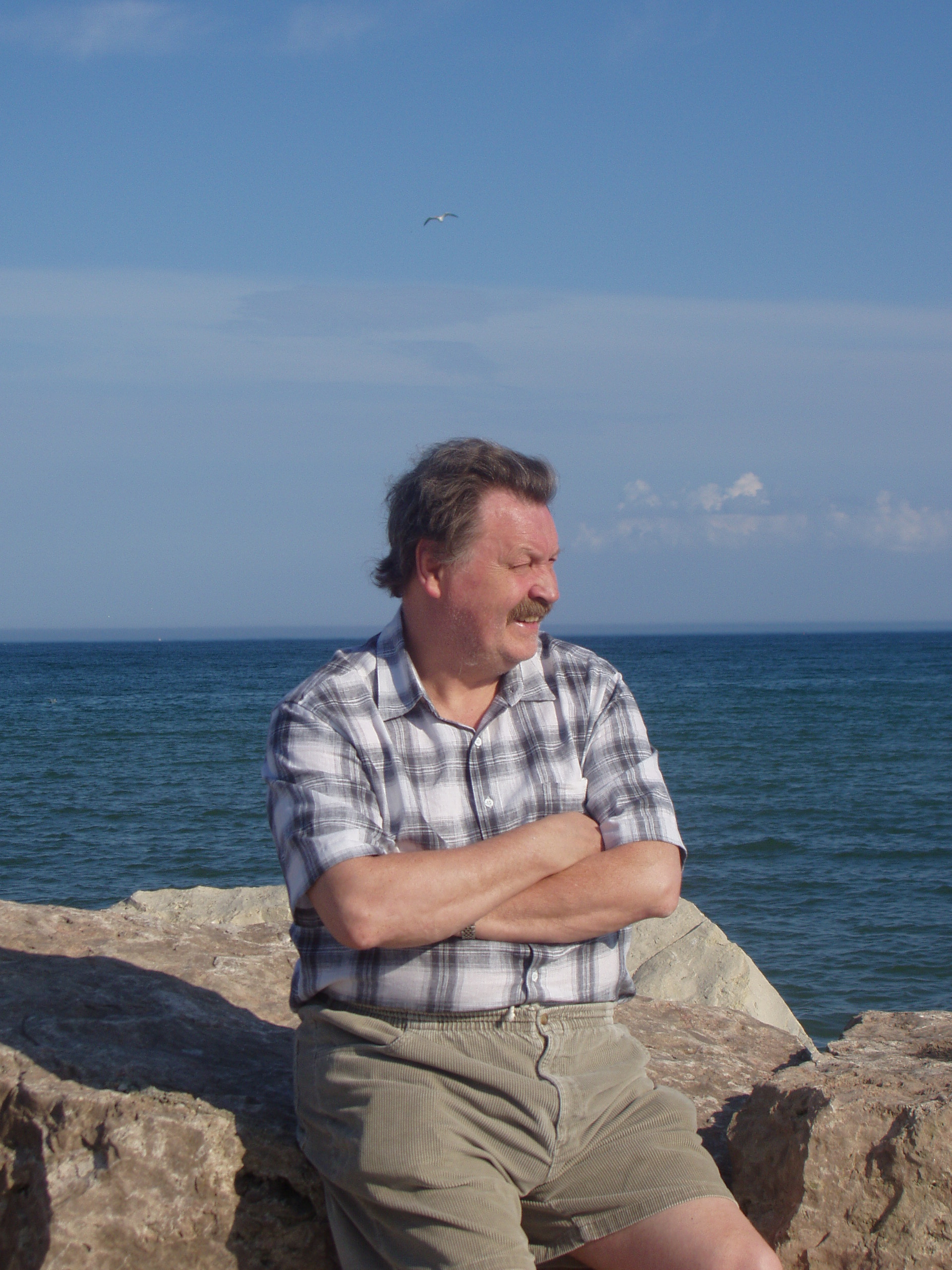
My biography
I was born on May 1, 1944, in evacuation in Novosibirsk, in a “demographic pit” at the end of World War II. My father worked at the military defense plant and it saved his life.
Surprisingly, at the final years of the war, the USSR’s military situation was in good shape. Majority of men and many women were mobilized to the front. Of the nearly 2.4 million GULAG prisoners less than a million remained in there. Others have been sent to the front. There was a huge hunger in the country. My mother’s best birthday present was a pot of oatmeal porridge cooked without salt in water, which she ate right away after my appearance in this world.
When the war ended, my father’s plant was moved to Krasnogorsk, near Moscow. In 1950, our family moved to Leningrad, where I was accepted into a special English school, where I studied English from the first grade. The school building had been constructed before the October 1917 Coup—it was the palace of some former prosperous person who had been expelled or executed after 1917. Thirty-nine students were accepted into First “A” class, but only 17 made it to tenth grade. It was an all-boys school at that time. Girls were only admitted to the classes in 1954.
The teaching system was purely Soviet—everything in accordance to the precepts of class-based Marxist-Leninist dogmatic disciplines. Those from the working-class backgrounds had an advantage. I can read, write and calculate, so I was accepted. It was good that we had not much Marxist-Leninist ideologists at school and they didn’t touch physics, chemistry, and mathematics during education.
By ninth grade, I was among the three shortest kids in my class. When I graduated I grew up to 6 feet height. During the last two grades we had dance classes, and girls from the neighboring school were invited to join us several times a year. I was good in math, so I got into Electrotechnical university on my first try after school. We were trained to be Electrical engineers for the country’s defense, so humanities subjects weren’t particularly important when applying to technical universities—the main thing was that you could write text without errors.
My high school graduation year was 1961. They experimented on us at the University two times. In our first year of study, we worked at a factory during the day time and studied after 4 PM. In my final 1967 year, the same thing happened at the sixth year of study. It was a good experience of practical life. Although after the university, we still had to gain practical knowledge at the factories and/or scientific institutions where we were assigned after getting the Electrical Engineer diploma. I was sent to the Optical-Mechanical Association. Soon I realized I’d backed the wrong horse. By this time, I’d become interested in psychology.
In the USSR, psychology was either within the framework of higher nervous system physiology, or philosophy, or pedagogy, or psychiatry—each a completely independent discipline, with specialists trained at the State University, or the Medical Institute, or the Pedagogical Institute. The basics of psychology in Russia that was developed under the Tsar and during the early Bolsheviks, was almost forgotten until the cosmos era. In the 1960s and 1970s, Soviet psychologists had to start from scratch. The Leningrad branch of psychology was considered as an experimental psychology. It was a blessed time. Everyone did their own thing. The good news was that there was no trace of Marxism-Leninism in our Psychology department of the State University. Or rather, there was a whiff, but it was subtle and unobtrusive. And the Communist Party, while formally overseeing us, didn’t exert much effort. Instead, foreign tests and questionnaires were widely translated in our Faculty. Many wrote their PhD dissertations using a combination of these scraps. I was among these happy guys and of course I used computer calculations while writing my dissertation theses.
Moscow psychology was initially considered as a theoretical branch. Western psychologists didn’t know our psychologists at all. Only the names of Vygotsky and Luria were heard abroad. It was fortunate that the Soviet country’s government became obsessed with space exploration, hoping to shove a stake in the Western bourgeoisie’s asses—at least to surpass them there. Funds were allocated for space exploration, and entire research fields began to emerge during this time. Compatibility and teamwork in work teams, the peculiarities of perceiving objects in confined spaces—everything was going great. Psychologists latched onto the back of the space shuttle and, to the whistle of rocket engines, began organizing and deepening engineering psychology, ergonomics, and social psychology.
I, too, became fascinated with psychological testing direction. I adapted Bennett’s Technical Comprehension battery. After it I developed several socio-psychological methods. I taught courses to students at the Institute of Culture and the Geography Department of Leningrad State University. Then, from research assistant, I was promoted to the Psychological faculty professor’s staff. I began with psychological testing, then moved on to the application of nonparametric mathematical methods in socio-psychological research, and finally began teaching socio-psychological training skills for industrial managers. The latter was prompted by the arrival of East German psychologist Professor Manfred Forwerg and his team of assistants. Based on all this, I was promoted to docent (associate professor), and then got an offer to organize a department of my choosing, which I named the Department of Industrial Psychology. It was the Gorbachev’s Perestroika era. The Communist State gave us money for development of this educational direction. So I recruited a staff of professors and moved to the Polytechnic Institute. We began serving top-level managers, or rather, teaching them partnership skills—especially since they were poorly educated, inexperienced in this regard. Unsettled market times were approaching in 1987. The Communist Party of the Soviet Union thought that if shop floor and department heads communicated according to the rules of high culture, their productivity would skyrocket.
Everyone loved our classes. For a whole week, you could forget about plans, assignments, and foul language and just relax wholeheartedly in the socio psychological training group. This free ride lasted almost five years for us. I don’t know how much good we did the shop floor heads, but we tried our best. And then Gorbachev was ousted from the presidency, which, I think, he was incredibly happy about. The free-marketeers, led by Yeltsin and Gaidar, seized power, and the chaos associated with the transition to a market economy began. Corpses, unscrupulousness, deception, crime. A decent person had no place in this viper’s nest, and educated people fled abroad.
I took advantage of the situation and rushed to the United States—that was a psychological Mecca at that time. I realized how much I still needed to learn there, so I enrolled in the Industrial Relations Department at the Minneapolis University. I was already 50 at that time. Without money, without acquaintances, without a strong lobby to support me, I had to start almost from scratch. Reaching the level I’d achieved in the USSR quickly wasn’t an option. I struggled for four years, bouncing between school and work, and then I remembered that I had an engineering degree also. The US was in need of programming and database specialists at the edge of the 2000th years, and I gained some experience in this field and, surprisingly, was hired by a private company as a programmer. My specialization was too narrow, so I transitioned to a Database Administrator position. Two companies I worked for closed down – one after another in one or two years, and at the age of 56, I transferred to a very secure transportation company, where I worked until retirement.
Such was the difficult career of a man who had to survive his entire life. Well, what could I do? I shouldn’t have found myself in a time of change—first in the USSR, then in the United States. My daughter’s family lives in the Czech Republic, and I moved there in my old age. I initially applied for her to move to the United States, but by the time her green card was approved, she was almost 55. It was too late to change her career, so my wife and I decided to be closer to our daughter, grandson and great granddaughter in Prague. We still don’t regret it, although the Czech language proved very difficult—at least at the turn of my eighties. So I am trying to return to Psychology again with this Blog and with several books that I wrote after retirement.
Probably my vision for building the Blog is not the best one. You see here my first attempt, but hopefully you will be so kind to correct my mistakes.